

Mathematics can be a source of great confidence or deep anxiety for primary school children. The difference often comes down to one simple factor: regular practice. Research in cognitive science consistently shows that short, frequent sessions are far more effective than occasional longer study periods.
- Spaced practice (little and often) roughly doubles long-term retention
- 10–15 minutes daily is the ideal duration for KS1 children
- Daily practice builds fluency, reduces anxiety, and creates lasting confidence
- Consistency matters more than perfection
The Science Behind Spaced Practice
The principle of spaced practice (also called distributed practice) is one of the most well-established findings in learning science. Spreading learning over time leads to significantly better long-term retention than concentrating it into a single session.
Spaced Practice vs Massed Practice
Spaced: 15 min × 5 days
Stronger, lasting memory
Massed: 75 min × 1 day
Quick to forget
Same total study time, dramatically different retention. Five short sessions beat one long session every time.
When a child practises on Monday and revisits the same skill on Tuesday, Wednesday, and Thursday, their brain forms stronger neural connections. Each time they retrieve the knowledge and apply it, the memory trace becomes more robust.
Why 10 to 15 Minutes Is the Sweet Spot
For KS1 children (ages 5–7), concentration spans are still developing. Most children this age can sustain focused attention for approximately 10 to 15 minutes.
- Matches natural attention span
- Child finishes on a positive note
- Small daily wins build confidence
- Easy to maintain as a habit
- Exceeds attention capacity
- Leads to frustration and tears
- Creates negative associations
- Diminishing returns after 15 mins
Every worksheet on My Daily Maths is specifically designed for this duration. The three-section format (fluency, word problems, reasoning) ensures balanced practice without overwhelming young learners.
A Week of Daily Practice — One Page Per Day
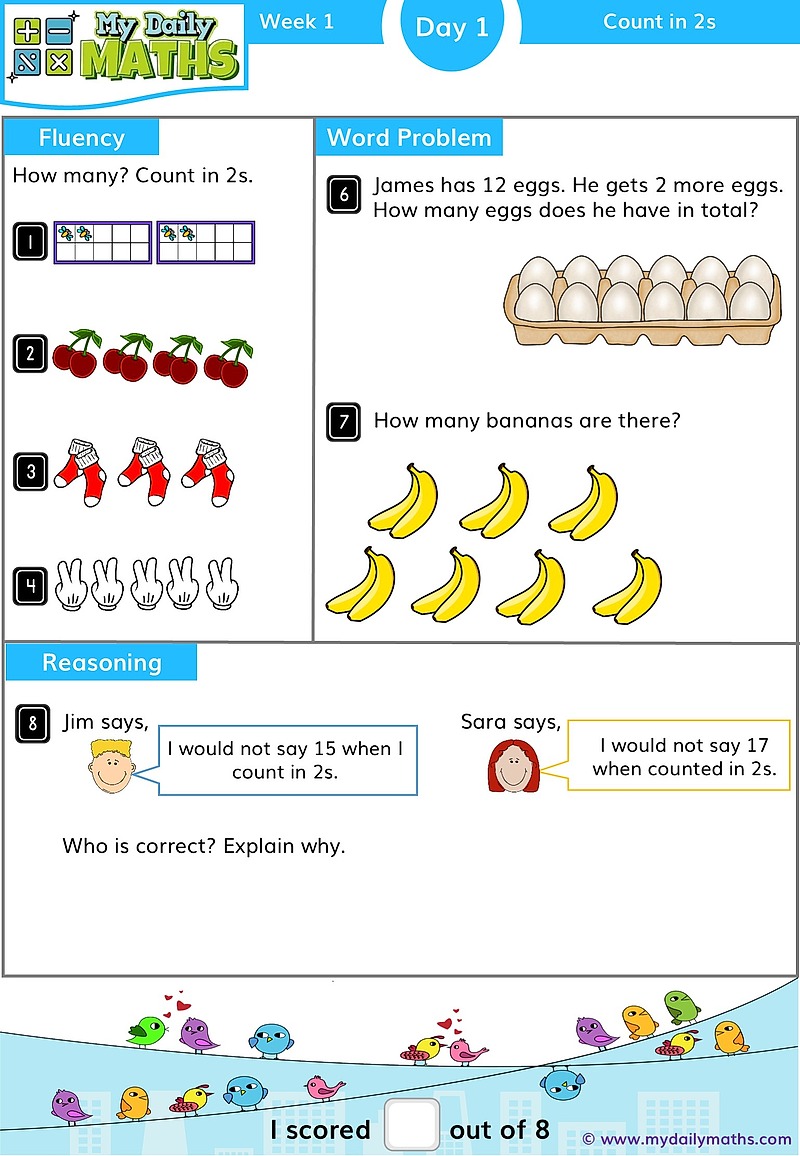
Day 1
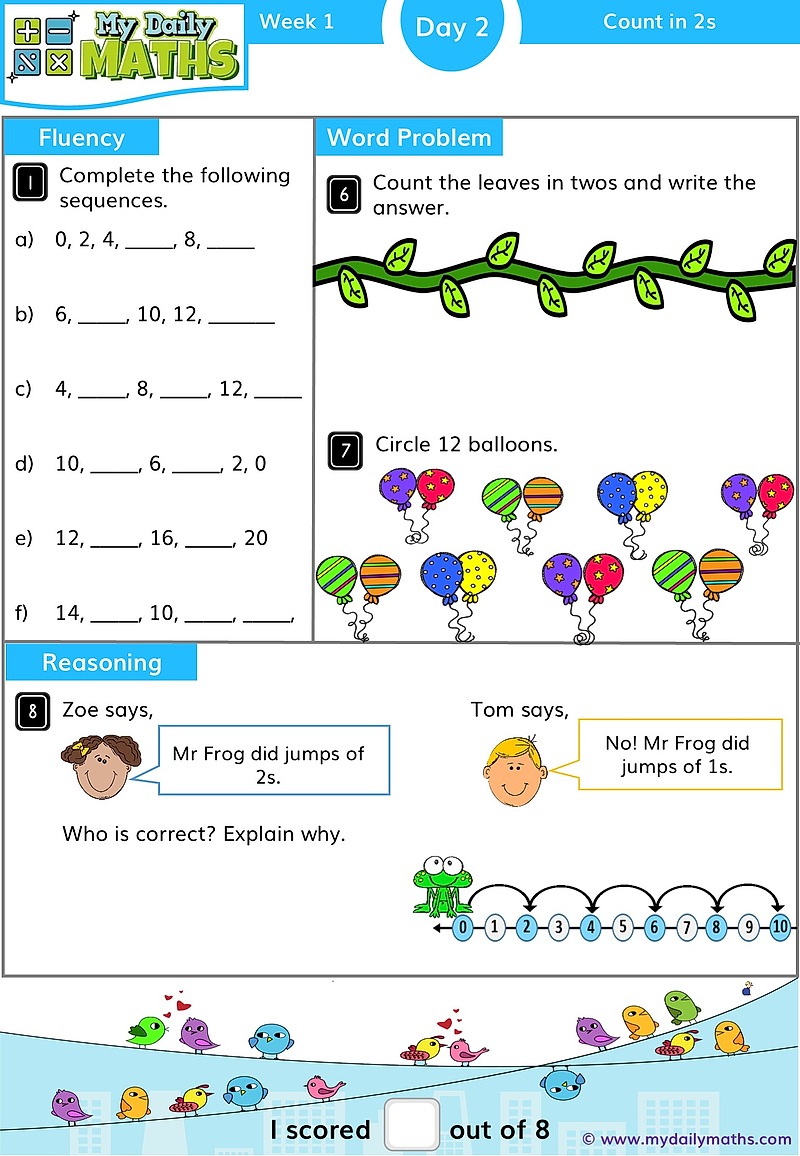
Day 2
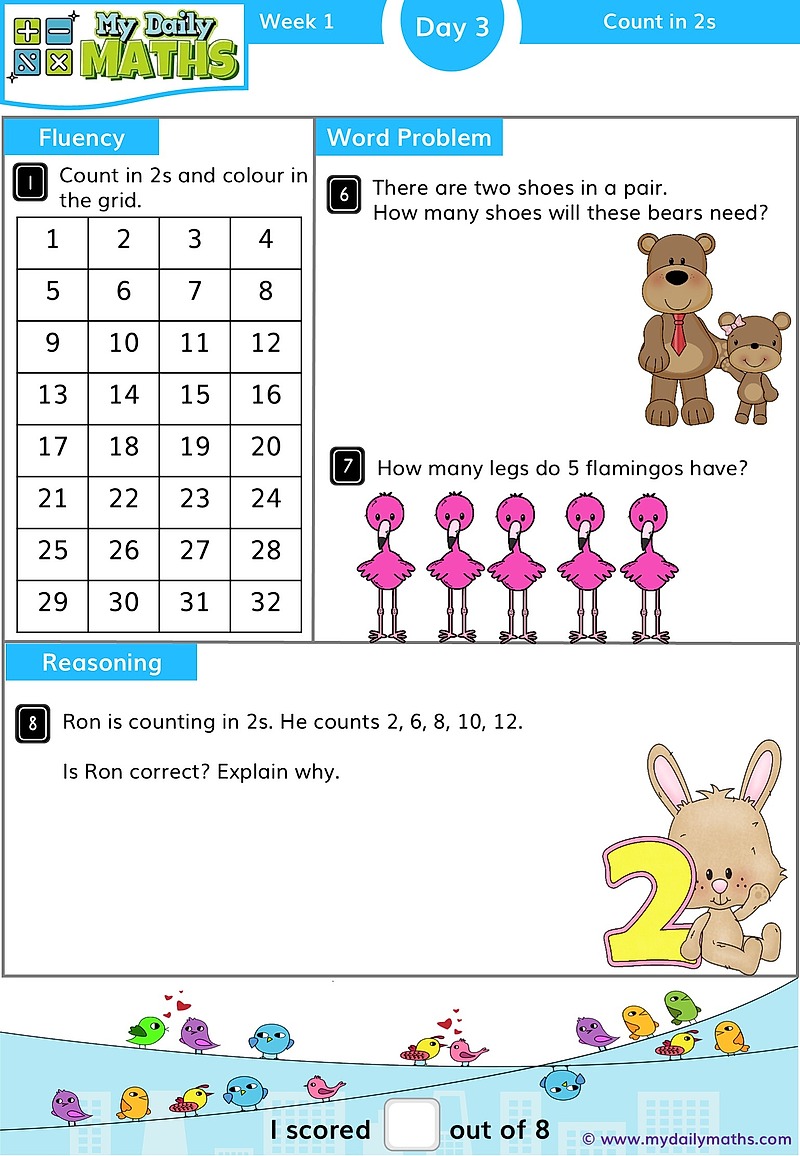
Day 3
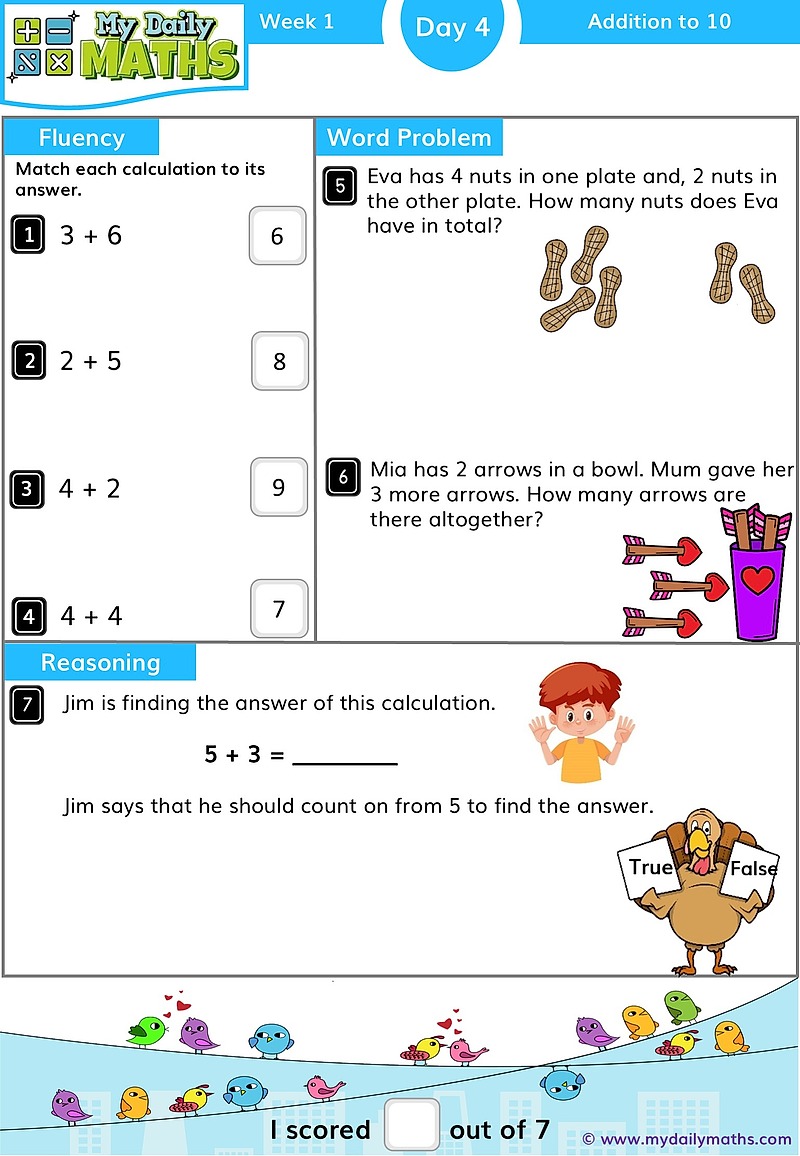
Day 4
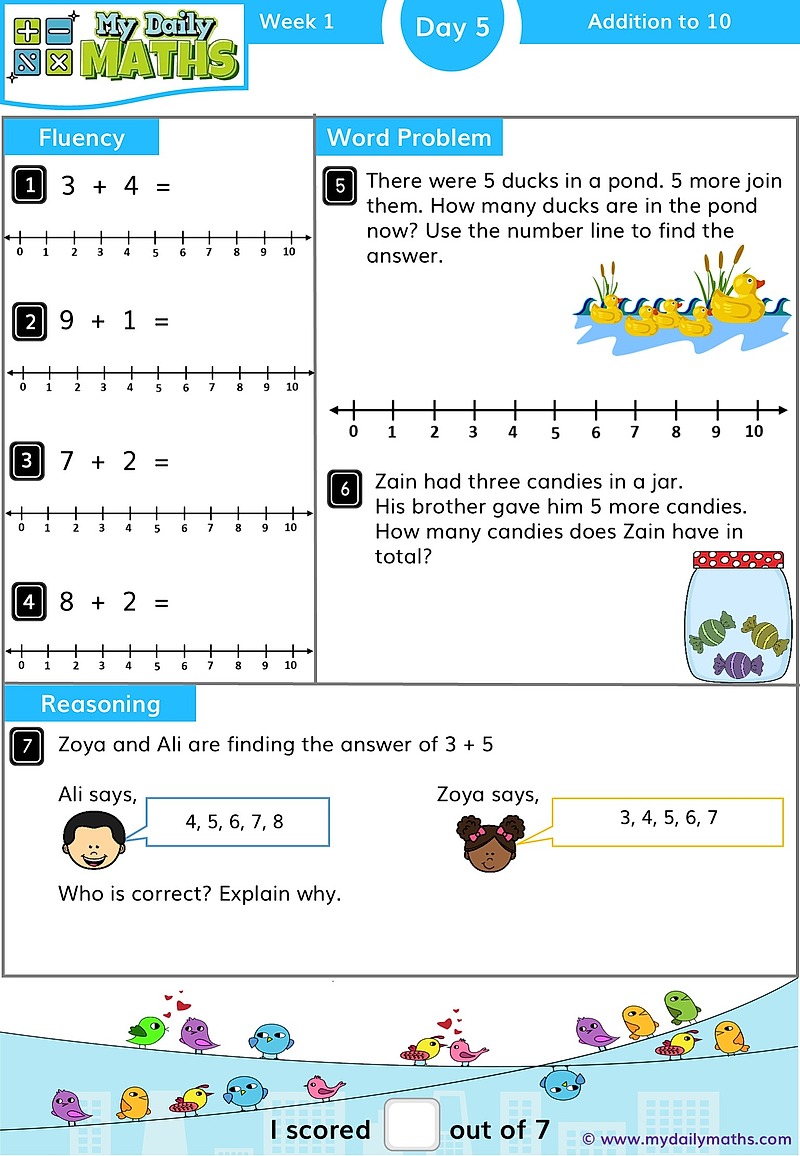
Day 5
Each worksheet covers fluency, word problems, and reasoning — designed for just 10–15 minutes of focused practice.
Building Mathematical Fluency
Fluency means recalling facts and carrying out procedures quickly and accurately — without stopping to think about every step. Just as a fluent reader doesn’t sound out every letter, a fluent mathematician recalls that 7 + 8 = 15 instantly.
The Fluency Effect
Without fluency
With fluency
Fluency frees up working memory so children can focus on understanding problems rather than struggling with basic calculations.
Reducing Maths Anxiety
Daily practice helps break the anxiety cycle in three important ways:
- Familiarity reduces fear. When maths becomes a normal, routine part of every day, it stops feeling like a daunting challenge.
- Competence builds confidence. Each completed worksheet is tangible evidence of “I can do this.”
- Short sessions prevent prolonged struggle. If a child hits a tricky question, there are only a few more to go.
6 Practical Tips for Establishing a Daily Routine
- Choose a consistent time — same time every day (before school or after a snack)
- Create a dedicated space — tidy desk, pencils ready, no screens
- Start small — just the fluency section (5 mins) for the first week
- Celebrate effort — praise trying hard, not just correct answers
- Make it social — sit together and ask “How did you work that out?”
- Track progress — sticker chart on the fridge for each completed worksheet
Why Effort-Based Praise Works Best
- “I love how you kept trying even when it was tricky!”
- “You used a really smart strategy there.”
- “Look how much you’ve improved since last week!”
Effort-focused praise builds resilience and a genuine love of learning, while “You’re so clever!” can actually make children afraid to attempt harder challenges.
What the Research Says About Consistency
Unstructured or poorly matched activities can be ineffective or even counterproductive. Curriculum-aligned worksheets ensure your child practises the right skills, at the right level, in the right sequence.
Getting Started Today
The best time to start a daily maths routine is now. Each topic on My Daily Maths is organised into weekly subtopics with five daily worksheets, making it straightforward to plan a full week at a time.
Free, curriculum-aligned worksheets for 10–15 minutes of daily practice. Organised by year and topic.
Year 1 Worksheets Year 2 WorksheetsRemember: consistency matters more than perfection. Even if you miss a day here and there, the habit of regular practice will make a meaningful difference. Start small, stay positive, and watch your child’s confidence grow.
Free Maths Worksheets
Download our free, curriculum-aligned worksheets for Year 1 and Year 2. Practise daily to build fluency and confidence.
Browse all worksheetsMy Daily Maths
We create free, curriculum-aligned maths worksheets for UK primary school children. Our resources are designed by educators and aligned to the National Curriculum to support daily maths practice at home.
View all articles