

Downloading and printing a maths worksheet takes a moment. Using it effectively to support your child’s learning takes a little more thought. This guide gives you a clear, step-by-step process.
- Step 1: Choose the right starting point
- Step 2: Set up the environment
- Step 3: Introduce the worksheet together
- Step 4: Know when to help and when to step back
- Step 5: Deal with frustration constructively
- Step 6: Review and celebrate progress
- Step 7: Build the daily habit
Step 1: Choose the Right Starting Point
Before printing a single worksheet, consider where your child is in their learning. The goal is material that is challenging enough to promote learning but not so difficult it causes frustration.
Finding the Right Level
Too Easy
No learning happens
Just Right
Challenge + success
Too Hard
Frustration and tears
Aim for the sweet spot: your child can do most questions independently but needs to think carefully about a few.
- Year 1: Start with Week 1, Day 1 — even if it seems easy, building confidence first creates positive momentum
- Year 2: Try a Day 1 worksheet from a mid-level subtopic. Too easy? Move forward. Struggling? Step back one week.
In education, this is called consolidation. A child who is completely fluent with addition to 10 will find addition to 20 much easier. Solid foundations make everything that follows more achievable.
Step 2: Set Up the Environment
Where and how your child works matters more than you might think.
The Physical Space
- Quiet, well-lit area with a flat surface (kitchen table is perfect)
- Sharp pencil (not pen — pencil allows easy corrections) and eraser
- Worksheet printed and ready before your child sits down
Minimise Distractions
Timing
Choose a time when your child is alert and receptive. For many children, this is morning. Avoid scheduling practice when they are tired, hungry, or upset.
Step 3: Introduce the Worksheet Together
Do not simply hand over the worksheet and walk away, especially in the early days:
- Read the title aloud and explain the topic
- Point out the three sections — fluency, word problems, reasoning
- Work through the first question together as an example (for the first few worksheets)
“Today we are practising adding numbers up to 10. The fluency section has quick calculations. The word problems are little stories. The reasoning part asks you to explain your thinking. Let’s look at the first one together.”
The Three-Section Worksheet Format
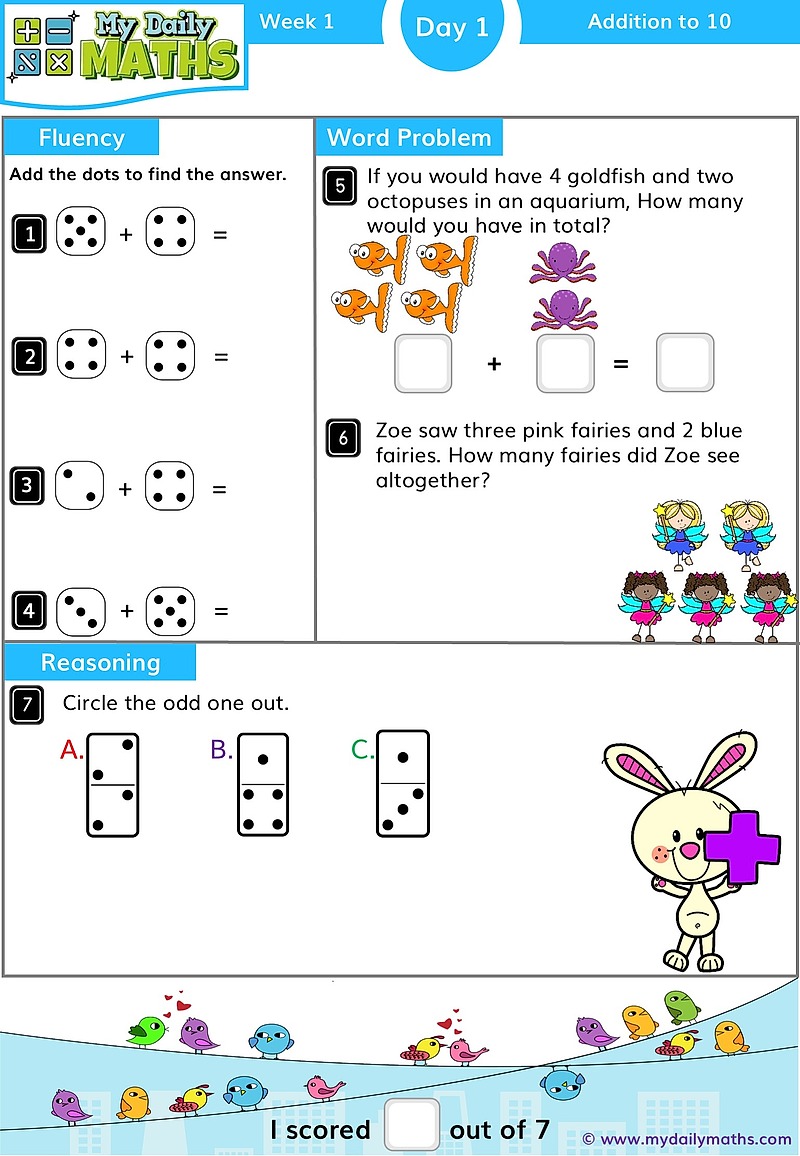
Fluency — Quick calculations for speed and accuracy
Word Problems — Real-life scenarios with maths
Reasoning — Explain, prove, and justify thinking
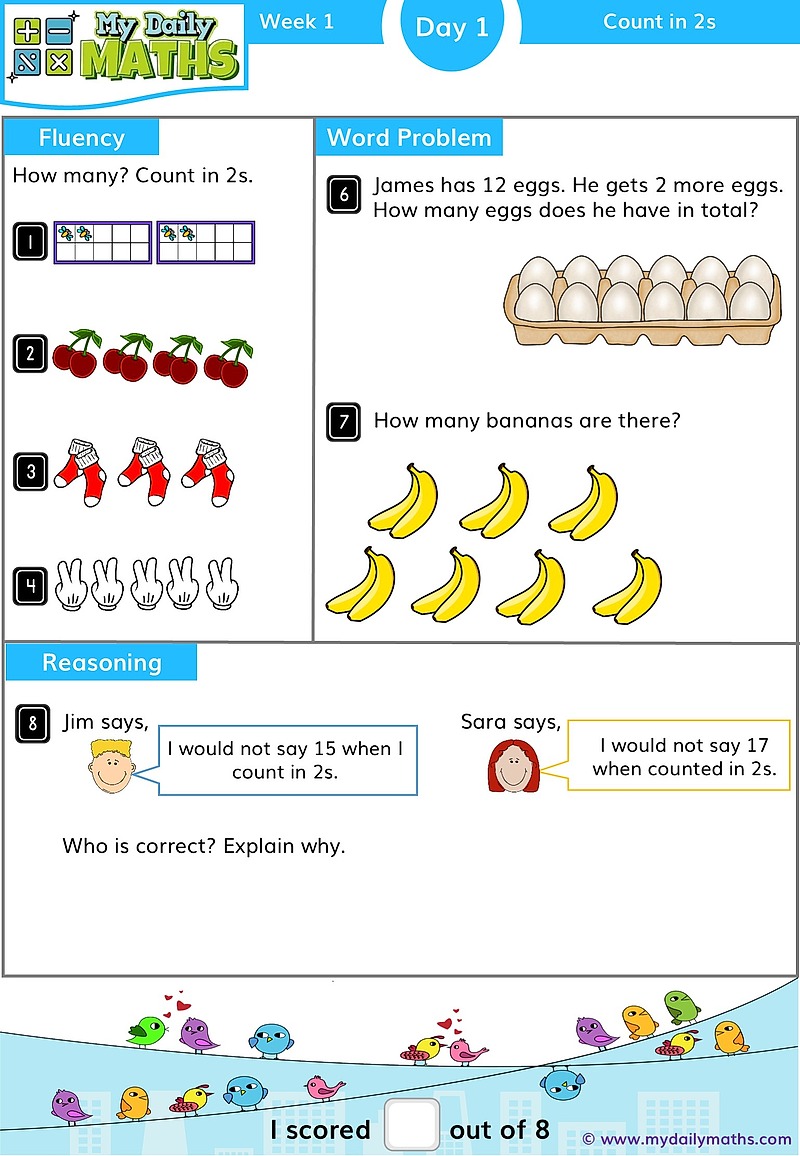
Every topic follows the same clear, consistent structure.
Point out each section to your child before they start. This helps them understand what to expect and builds independence.
Step 4: Know When to Help and When to Step Back
Finding the balance between helping and letting your child work independently is one of the biggest challenges.
| Section | Your Role | Key Approach |
|---|---|---|
| Fluency | Mostly observe | If they need help with every question, the level is too hard — step back |
| Word Problems | Read aloud if needed | Ask “What do we need to work out?” instead of telling them |
| Reasoning | Discuss together | Ask open questions: “Why do you think that?” “How could you check?” |
Step 5: Deal with Frustration Constructively
Every child gets frustrated at some point. How you handle these moments has a lasting impact on their relationship with maths.
- “I can see this one is tricky. That’s OK!”
- “Let’s use your fingers to count on.”
- “Shall we draw a picture to help?”
- “You’ve worked really hard. Let’s stop here.”
- “It’s easy, just try harder.”
- Simply giving them the answer
- Forcing them to continue when upset
- “We’re not stopping until it’s done.”
If your child is genuinely distressed, it is perfectly OK to stop. Forcing them to continue when upset creates negative associations that are much harder to undo than a missed question. There is always tomorrow.
Step 6: Review and Celebrate
Focus on What Went Well
- “You got all of these right — your number bonds are getting really strong!”
- “I noticed you used a number line for that tricky one. Clever strategy.”
- “You explained your reasoning really clearly. Well done!”
Address Errors Gently
Frame errors as learning opportunities: “Let’s look at this one together. Can you spot what happened?” Children who are comfortable making mistakes learn faster than those afraid to get things wrong.
Track Progress
Keep completed worksheets in a folder. Looking back periodically shows your child how much they have improved — this tangible evidence of progress is enormously motivating.
Step 7: Build the Daily Habit
- Make it non-negotiable — treat it like brushing teeth (but be flexible about timing)
- Use visual motivation — sticker chart on the fridge, celebrate 5-day streaks
- Offer choices — “Money worksheet or Shapes worksheet today?”
- Keep it short — 10–15 minutes maximum, always finish on a positive
Common Questions from Parents
- Should I time my child?
- For the fluency section, gentle timing can be motivating for some children (“Can you finish before the sand timer?”). For word problems and reasoning, timing creates unhelpful pressure. Use your judgement.
- What if they finish too quickly and get everything right?
- Great news! Move to the next subtopic or week. You can also extend by asking them to explain their method — this builds reasoning skills even when the arithmetic is easy.
- What if my child refuses to do their worksheet?
- Understand the reason — are they tired, anxious, or asserting independence? A small change often helps: doing it together, using coloured pencils, or letting them choose the topic.
- How long should we continue with daily worksheets?
- Daily maths practice benefits children throughout primary school. The content changes as they progress, but the habit remains valuable through Year 6 and beyond.
Over 180 free worksheets organised by year, topic, and week. Download, print, and start today.
Year 1 Worksheets Year 2 WorksheetsThe goal is not perfection. It is consistent, positive practice that builds skills and confidence over time. Start today, stay patient, and trust the process.
Free Maths Worksheets
Download our free, curriculum-aligned worksheets for Year 1 and Year 2. Practise daily to build fluency and confidence.
Browse all worksheetsMy Daily Maths
We create free, curriculum-aligned maths worksheets for UK primary school children. Our resources are designed by educators and aligned to the National Curriculum to support daily maths practice at home.
View all articles